RV Solar Installers Who Understand How You Actually Camp

You find a campsite with a great view, plenty of breathing room, and absolutely no electrical hookups. Now comes the question: will your RV have enough power to enjoy it?
If you’re comparing RV solar installers, start with how they answer that question. Look for someone who reviews your daily electricity use, checks your existing equipment, and explains what the finished system can realistically do.
You should leave that conversation knowing whether you can make breakfast, keep your refrigerator running, and settle in for the evening with the power you have available.
Here’s how to find an installer who can help you get there.
What should RV solar installers ask before recommending a system
A useful first conversation starts with a picture of your camping day.
Do you spend most nights at campgrounds with hookups and occasionally stop overnight on the road? Are you hoping to spend several days boondocking? Will you be working from your RV?
Think about what you actually plug in. A laptop and a few phone chargers create a different demand than regularly using an induction cooktop or air conditioner.
Before requesting a quote, jot down:
- Your RV’s year, make, and model.
- Any existing panels, batteries, and inverter equipment.
- Appliances you want to run and approximately how long you use them.
- How many nights you want to camp without hookups.
- Where and when you travel, including shady campsites or winter trips.
You don’t need to arrive with a spreadsheet of electrical calculations. “I want to work all morning and make lunch without starting the generator” is a useful starting point.
Why do batteries and inverters matter when you are shopping for solar
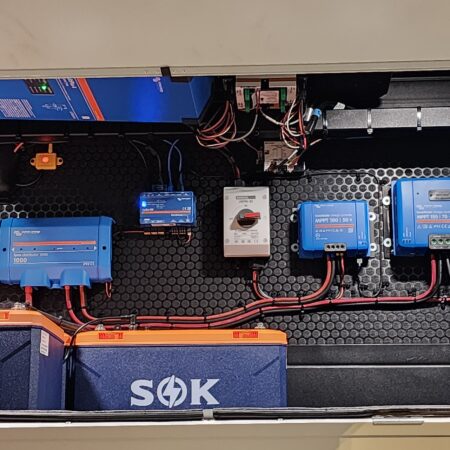
RV solar works as a system. Panels generate electricity in sunlight, batteries store energy for later, and an inverter converts battery power into the AC electricity used by many household appliances. A charge controller regulates solar charging. Our RV solar component guide explains the equipment involved.
That’s why a quote showing only panel wattage leaves important questions unanswered.
Ask your installer to explain three things: how much energy you can store, which appliances you can run together, and how you’ll recharge after using that energy. Those answers should fit the camping day you described.
Clouds, shade, and season affect solar production, so your charging plan needs to account for less-than-perfect sunshine. Our guide to how RV solar works walks through that relationship.
What should you look for in an installation quote
Look for enough detail to understand what you’re buying and compare the actual work included.
Two proposals can list similar solar wattage while including different batteries, inverter capabilities, monitoring equipment, and installation work. Ask for the component models and a clear description of what the price covers.
A few useful questions:
- Does this include labor, mounting hardware, wiring, and required electrical protection?
- Which existing components will stay, and which will be replaced?
- Which outlets and appliances will work on inverter power?
- What testing and owner walkthrough are included?
- What could change the quoted price?
- Who handles installation questions and equipment warranty issues afterward?
If an answer feels vague, ask for an example. “What happens when I use the microwave while someone is making coffee?” is easier to picture than a string of equipment specifications.
How can you evaluate an installer’s RV experience
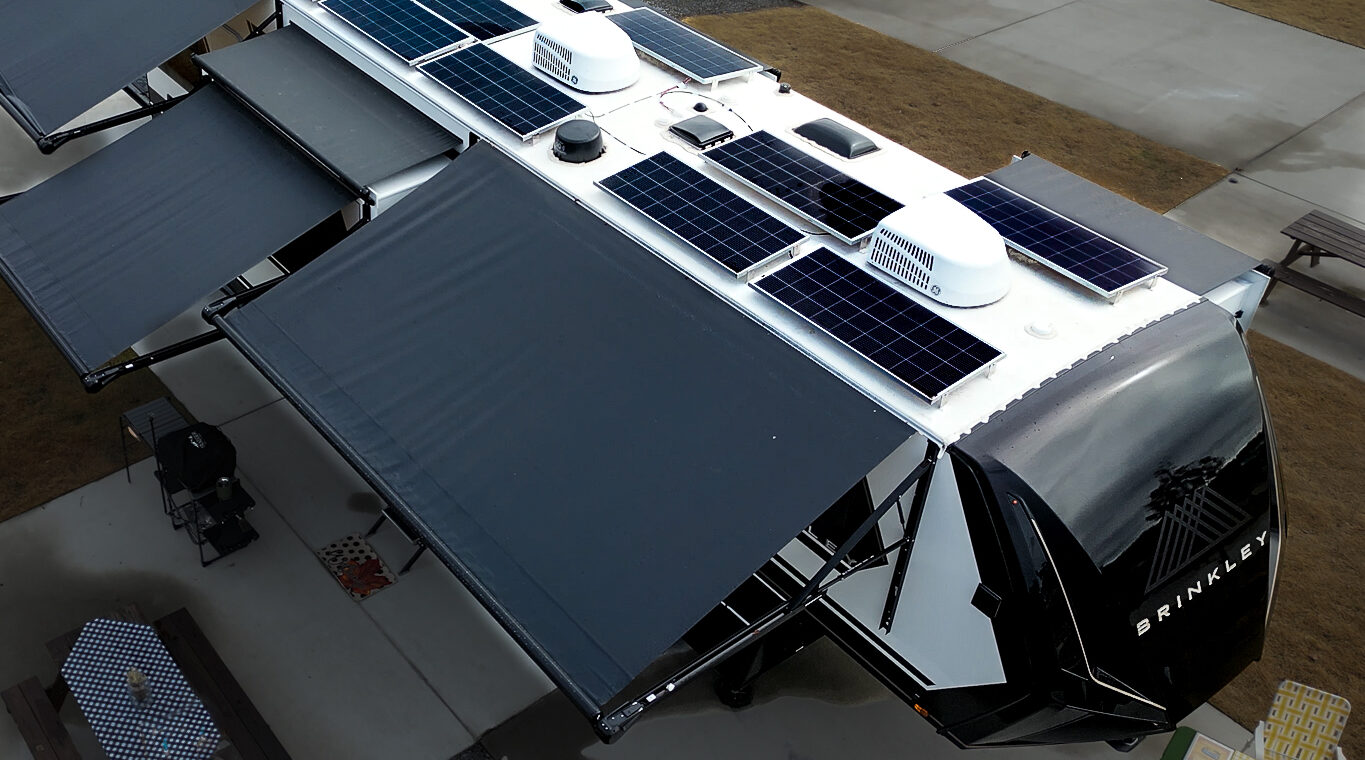
Ask to see completed work on RVs similar to yours, including the equipment compartments and roof installation.
Look for explanations of why the installer chose the layout and components. Can you reach equipment for service? Will the installation use storage space you need? How are roof mounting and sealing handled for your RV?
At Go RV Solar, our installation gallery includes video tours of completed systems, including Brinkley Model Z and Model G projects. Watching a build tour can help you form better questions about your own rig.
Can you upgrade the solar equipment you already have
Yes, an existing system may be a starting point. The first step is identifying what’s installed and whether it fits your next goal.
Maybe you want to get through the night with more battery reserve. Maybe you want access to additional appliances when unplugged. Describe the problem you’re trying to solve before choosing equipment.
Go RV Solar offers partial and existing solar system services, so you can discuss a targeted upgrade alongside a complete installation.
How long does professional RV solar installation take
At Go RV Solar, a typical installation takes about four to five days, with timing depending on the project. You’ll need other accommodations because staying in the RV during installation isn’t permitted. The process includes a walkthrough and demonstration when the work is complete. See our installation FAQs for planning details.
Use that handoff to practice reading the monitor and understanding your charging options. You want to feel comfortable with the system before your first unplugged overnight.
Ready to talk with RV solar installers in Florida?
Go RV Solar designs and installs custom RV solar systems in Winter Haven, Florida. We offer full systems and upgrades tailored to your RV and travel plans. You can explore the options on our Go RV Solar website.
Tell us where you want to go and what you want to power when you get there. Request your free consultation, and let’s talk through a setup that fits your camping life.

Co-Owner / Solar Advisor
Jason is the resident expert for anything that carries a current. Drawing on an extensive background in low-voltage tech and a deep history of RV inspections, he has a knack for making complicated systems work seamlessly. He’s the practical force behind the team, dedicated to high-quality builds and reliable energy solutions.