
Looking for a Victron RV Installer? Here’s What to Know Before Choosing One
If you’ve spent any amount of time researching serious RV electrical systems, you’ve probably run into the name Victron Energy.
Probably more than once.
Victron equipment has become extremely popular among RVers building high-performance solar, lithium battery and off-grid electrical systems. You’ll find Victron inverter/chargers, solar charge controllers, battery monitors and system controls in everything from camper vans to fifth wheels and large Class A motorhomes.
So it isn’t surprising that RV owners frequently search for a Victron installer near me or a Victron RV solar installer when they’re ready to upgrade.
But there’s an important distinction to make:
Buying great equipment and building a great electrical system aren’t the same thing.
Why Is Victron So Popular in RV Solar Systems?
One of Victron’s biggest advantages is the ability to build an integrated electrical system rather than treating every component like a separate piece of equipment.
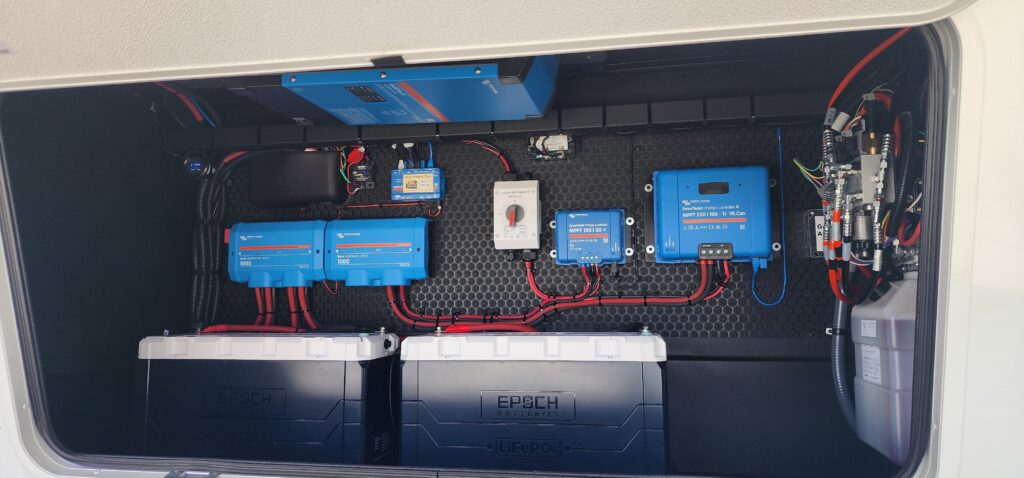
Depending on the system, a Victron RV installation might include a MultiPlus or MultiPlus-II inverter/charger, SmartSolar MPPT charge controllers, battery monitoring equipment, a Cerbo GX and GX Touch display, along with additional components.
Together, these can give an RVer a tremendous amount of control and visibility.
Instead of wondering whether your batteries are charged or whether the panels are doing anything, you can actually see what is happening throughout the electrical system.
For people who spend significant time off-grid, that information is valuable.
What Does a Victron MultiPlus Do in an RV?
The inverter/charger is one of the most important components in many high-capacity RV electrical systems.
An inverter converts DC energy stored in the battery bank into AC electricity that can power standard household-style appliances and outlets.
The charger side performs the opposite job when AC power is available, helping recharge the battery bank.
That makes equipment such as the Victron MultiPlus central to many lithium and solar builds.
But choosing an inverter isn’t simply a matter of buying the biggest one available.
The inverter needs to make sense for the battery bank, wiring, electrical loads and overall system design.
What Is a Victron Cerbo GX?
This is one of the pieces people discover after they’ve already fallen down the Victron rabbit hole.
The Cerbo GX acts as a communication and monitoring hub for compatible components in the electrical system.
Paired with a GX Touch display, it can give you an easy way to see what’s happening with solar production, batteries, inverter activity and other connected equipment.
For an RVer who genuinely wants to understand the electrical system rather than rely on a vague battery gauge, that can be a major upgrade.
It also illustrates why Victron systems are appealing.
You’re not just buying individual components.
You’re building an ecosystem.
Do You Need a Victron System in Your RV?
Not necessarily.
Victron makes excellent equipment, but that doesn’t mean every RVer needs an elaborate Victron installation.
The question should still start with how you use your RV.
If you primarily camp with full hookups and want a modest amount of backup power, a large off-grid electrical system may be unnecessary.
If you’re frequently boondocking, working from your RV, running substantial AC loads or trying to reduce dependence on a generator, a more advanced Victron-based system may make considerably more sense.
Your travel style should determine the electrical system.
Not the logo on the equipment.
Victron and Lithium Batteries
Lithium batteries and Victron equipment are frequently paired in modern RV electrical upgrades.
There’s a logical reason.
A large inverter needs a battery bank capable of supplying significant power. And if you want to spend meaningful time away from shore power, you need enough usable battery capacity to support your loads when the sun isn’t shining.
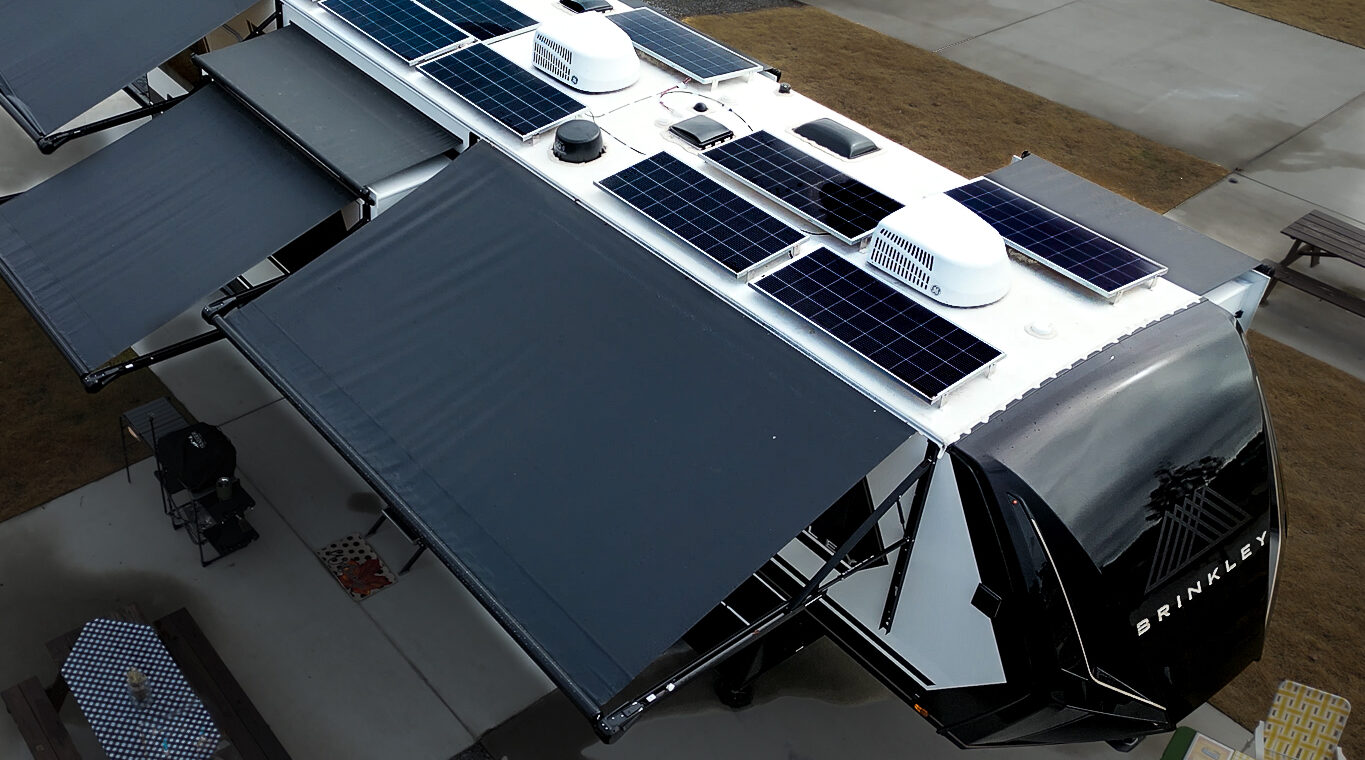
The solar array then helps replenish that stored energy during the day.
Think of the system as a cycle:
Solar generates it. Batteries store it. The inverter makes it usable. Monitoring tells you what’s happening.
When all four parts are sized correctly, the result can completely change what an RV can do off-grid.
What About a Dual-Inverter Victron RV System?
For RVers with substantial power demands, systems can become considerably more sophisticated.
Larger fifth wheels and motorhomes may use dual inverter/charger configurations paired with substantial lithium battery banks and large solar arrays.
That’s the territory where system design becomes especially important.
More equipment means more capability, but it also means higher current, more wiring, more configuration and more opportunities for components to be mismatched.
If your goal is a serious off-grid RV electrical system, this is where choosing an experienced Victron RV installer becomes especially valuable.
A Victron Dealer Isn’t Necessarily a Victron RV Installer
This is an important distinction if you’re searching for a Victron dealer near me.
Someone may be able to sell Victron equipment without specializing in RV electrical systems.
And someone may understand solar without regularly working inside RVs.
RV installations introduce their own challenges: limited space, vibration, existing factory wiring, generator integration, shore power, roof layouts, weight considerations and the quirks of individual RV manufacturers.
For an RV project, you don’t simply want somebody who knows the component.
You want somebody who understands the application.
Questions to Ask a Victron RV Installer
Before committing to an installation, talk about what the finished system will actually do.
How much battery capacity is being proposed?
Why?
How much solar?
What loads will the inverter support?
What happens when you connect to shore power?
How does the generator interact with the system?
How will the batteries recharge?
How will you monitor everything?
What happens if you want to expand the system later?
A good system should have answers to those questions before installation begins.
The Goal Isn’t to Own Victron Equipment
Here’s the bigger point.
Nobody buys an RV because they dreamed of owning a charge controller.
You buy the equipment because of what you want to do with the RV.
Wake up somewhere miles from the nearest electrical pedestal.
Make coffee.
Turn on the TV.
Open the laptop.
Keep the refrigerator cold.
Watch the batteries recharge when the sun comes up.
Stay another night because there’s no reason you have to leave.
That’s what the equipment is supposed to accomplish.
If you’re searching for a Victron Energy installer, Victron dealer, Victron inverter installation, Victron MultiPlus installation, or a complete Victron solar system for an RV, start with the system you want to build — not simply the components you want to buy.
Go RV Solar designs and installs custom RV solar, lithium battery and inverter systems. Talk with the team about whether a Victron-based electrical system is the right fit for your RV and your off-grid goals.

Co-Owner / Solar Advisor
Jason is the resident expert for anything that carries a current. Drawing on an extensive background in low-voltage tech and a deep history of RV inspections, he has a knack for making complicated systems work seamlessly. He’s the practical force behind the team, dedicated to high-quality builds and reliable energy solutions.


