
RV Solar Installation: Why Professional Installation Matters More Than the Panels You Buy
Shopping for RV solar equipment is easy.
You can spend an entire evening comparing panels, batteries and inverters without leaving your couch.
Installing all of it correctly inside a vehicle that’s going to bounce down the interstate at 70 mph is another story.
That’s why choosing an RV solar installation isn’t only about choosing equipment.
It’s about designing an electrical system.
And the quality of that design and installation can matter every bit as much as the name printed on the components.
RV Solar Installation Is More Than Putting Panels on the Roof
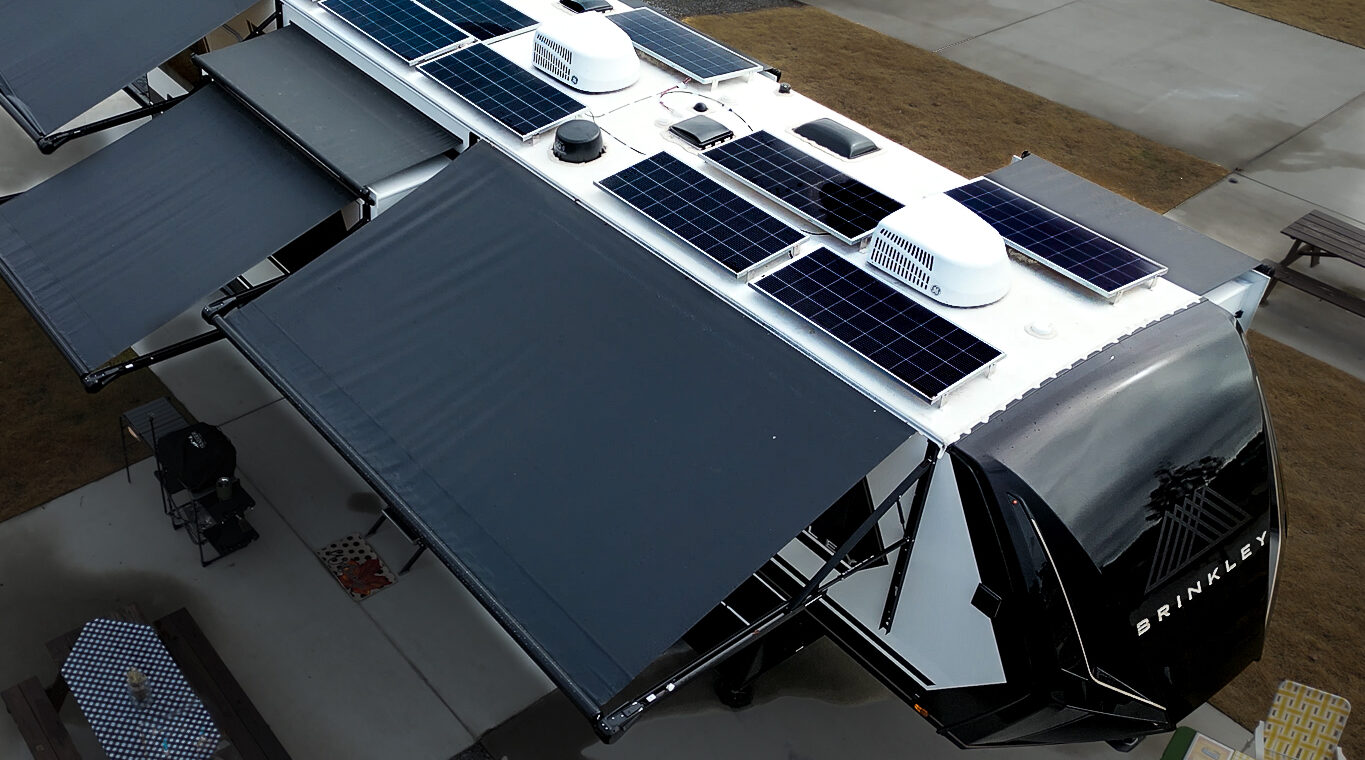
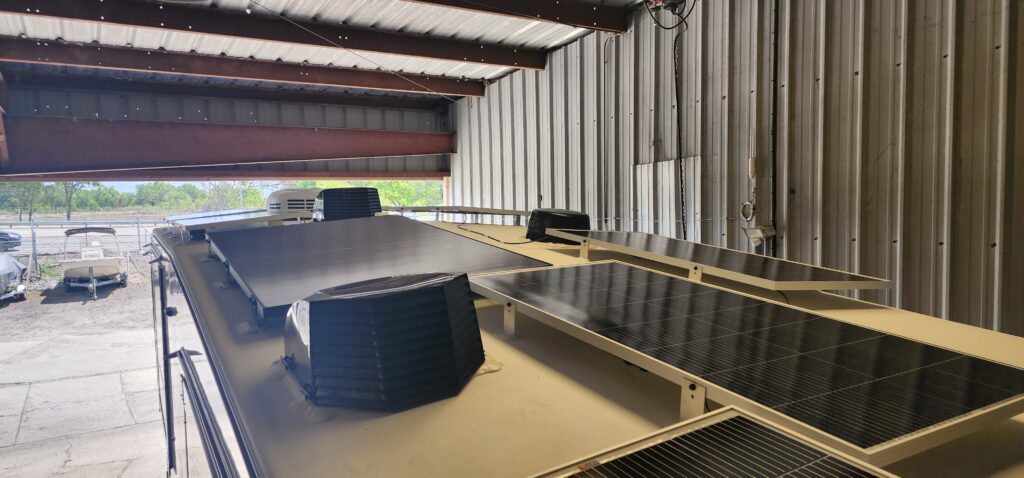
When people picture an RV solar installation, the panels naturally get most of the attention.
They’re the part everyone sees.
But a complete system may include solar panels, lithium batteries, inverter/chargers, MPPT charge controllers, monitoring equipment, DC-to-DC charging, upgraded wiring, disconnects, breakers, fuses and numerous other components.
Those pieces then have to integrate with systems already inside the RV.
Shore power.
The converter or inverter.
Generator power.
The existing DC system.
Factory wiring.
Existing solar equipment.
The challenge isn’t simply getting electricity from the roof to the batteries.
It’s getting the entire electrical system to work together safely and predictably.
Why RV Solar Installation Is Different From Residential Solar
An RV isn’t a house with wheels attached.
Space is limited.
Roof space is limited.
Battery placement is limited.
Wire routing can be challenging.
Components have to tolerate vibration and movement.
Weight matters.
Heat matters.
And every RV manufacturer seems to have its own ideas about where electrical equipment should live.
Even two RVs of the same model can present different challenges depending on factory options and modifications made by previous owners.
That’s why professional RV solar installation requires more than knowing how solar panels work.
It requires understanding RV electrical systems.
Start With Power Consumption, Not Panel Count
One of the easiest ways to end up disappointed with an RV solar installation is to start by choosing a solar package before figuring out your electrical needs.
Suppose you install 1,000 watts of solar.
Is that enough?
We still don’t know.
How much battery storage do you have?
How much energy do you consume overnight?
What size inverter are you running?
Do you use propane for refrigeration and cooking, or are you trying to run more appliances electrically?
Do you work remotely?
Do you want to run air conditioning?
How frequently will you have access to shore power?
A good RV solar installation starts by understanding those questions.
The panels come later.
Your Battery Bank and Inverter Have to Match Your Goals
Imagine having plenty of solar generation but not enough battery capacity to make it through the night.
Or a large lithium battery bank paired with an inverter that can’t power the appliances you bought the batteries to run.
Or an enormous inverter connected to a battery bank that can’t comfortably support its demand.
Individually, every component might be excellent.
Together, the system can still be wrong.
That’s why a custom RV solar installation should be approached as a complete electrical design rather than a collection of upgrades.
Can You Upgrade an Existing RV Solar Installation?
Absolutely.
In fact, many RV owners don’t need to start over.
Maybe your factory-installed solar array is perfectly usable but your battery bank is undersized.
Maybe you upgraded to lithium batteries and now want a more capable inverter.
Maybe you want to add panels.
Maybe you’re happy with most of the system but want better monitoring.
Or maybe you bought a used RV and inherited an electrical system that makes you say, “What in the world did the previous owner do here?”
Existing systems can often be evaluated and improved.
The key is figuring out what should stay, what should change and what is currently limiting the system.
What Should You Ask an RV Solar Installer?
Don’t just ask, “How many watts do I get?”
Ask how the system is being designed.
Ask what assumptions are being made about your energy consumption.
Ask about battery capacity.
Ask what your inverter will and won’t run.
Ask how the batteries will recharge.
Ask how the system integrates with shore power and your generator.
Ask how you’ll monitor it.
And perhaps most importantly, explain how you actually camp.
A good installer should care whether you’re spending weekends at campgrounds or trying to disappear into the desert for ten days.
Those details change the system.
Professional Installation Is Also About What You Don’t See
Some of the most important parts of an RV solar installation aren’t particularly exciting to photograph.
Wire sizing isn’t glamorous.
Neither are fuses.
Or breakers.
Or cable routing.
Or proper connections.
But these are high-current electrical systems installed inside vehicles.
Details matter.
A beautiful row of solar panels doesn’t tell you what’s happening behind the walls or inside the electrical compartment.
The quality of an RV solar installation is often hiding exactly where nobody sees it.
What Does an RV Solar Installation Cost?
The answer depends heavily on what you’re installing.
A battery upgrade is different from a complete off-grid system.
Adding panels to an existing system is different from building an electrical system from scratch.
A large motorhome designed to support substantial AC loads requires a very different installation from a smaller travel trailer with modest electrical needs.
That’s why RV solar system pricing makes more sense after the goals of the system have been established.
First decide what you want the RV to do.
Then determine the equipment and installation required to make it happen.
Don’t Build Your Camping Style Around Your Electrical System
This is the part we think gets lost in all the technical conversations about RV solar.
The goal isn’t solar.
The goal is what solar allows you to do.
Stay somewhere without hookups.
Work from the road.
Spend more time boondocking.
Run fewer hours on the generator.
Travel with more flexibility.
Use more of your RV when you’re disconnected from shore power.
A properly designed RV solar installation should make the RV adapt to the way you want to travel — instead of forcing you to adapt your travels around the limitations of the RV.
Thinking about an RV solar panel installation, lithium battery upgrade or complete off-grid electrical system? Talk with Go RV Solar about building a system around your RV and the way you actually use it.

Co-Owner / Solar Advisor
Jason is the resident expert for anything that carries a current. Drawing on an extensive background in low-voltage tech and a deep history of RV inspections, he has a knack for making complicated systems work seamlessly. He’s the practical force behind the team, dedicated to high-quality builds and reliable energy solutions.


